






What is CRM Software Used For? A Complete Guide for Businesses
What is CRM Software Used For? A Complete Guide for Businesses
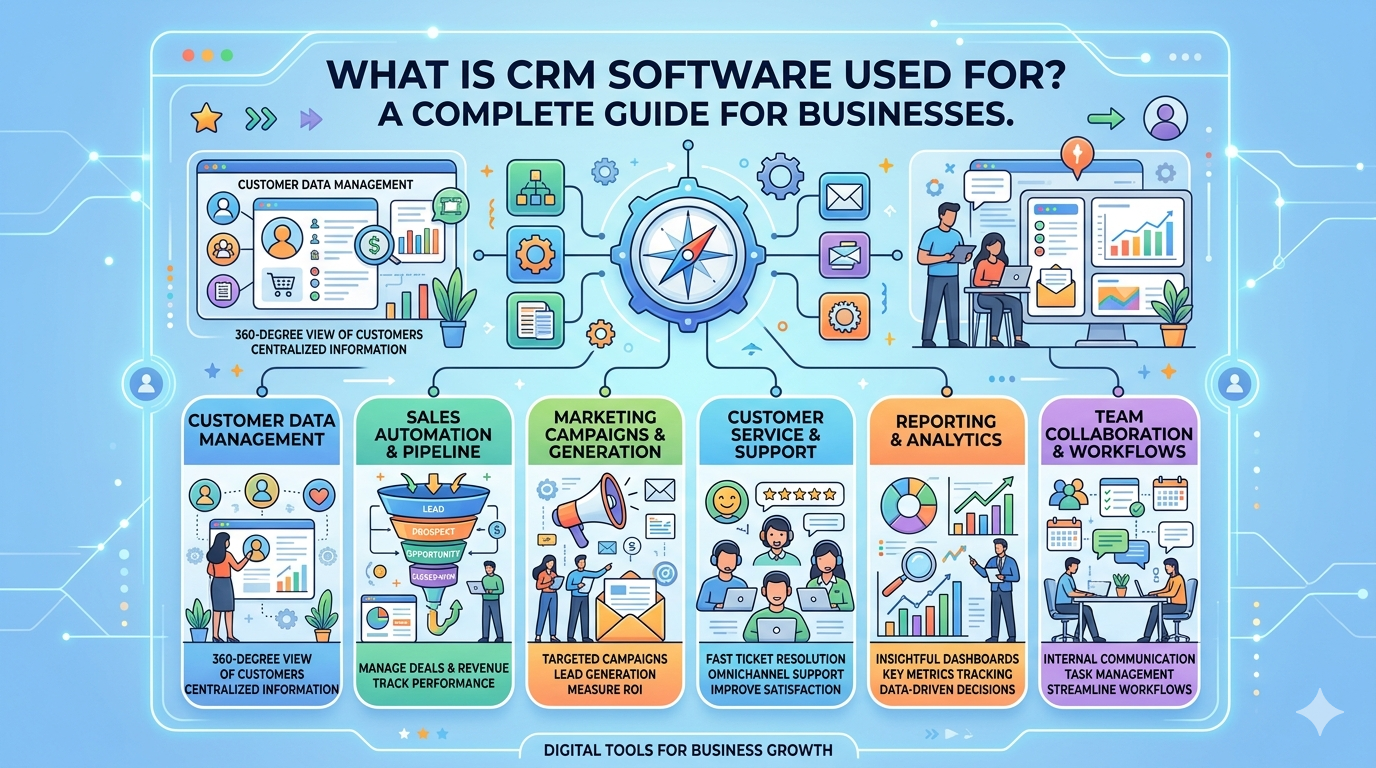
In today’s digital business environment, managing customer relationships effectively is essential for growth and long-term success. This is where CRM (Customer Relationship Management) software plays a vital role. But many businesses still ask an important question—what is CRM software actually used for? The answer goes far beyond just storing customer information. CRM software is a powerful tool that helps businesses manage interactions, streamline processes, and improve overall customer experience.
Managing Customer Data Efficiently
One of the primary uses of CRM software is to store and manage customer data in a centralized system. Instead of relying on spreadsheets or multiple tools, businesses can keep all customer information in one place. This includes contact details, communication history, purchase records, and preferences.
Having centralized data ensures that teams can quickly access accurate information, reducing errors and improving decision-making. It also helps businesses maintain a complete view of each customer.
Tracking Sales and Leads
CRM software is widely used for managing sales pipelines and tracking leads. It helps businesses capture leads from various sources, assign them to sales teams, and monitor their progress through different stages of the sales process.
This visibility allows sales teams to prioritize high-value leads, follow up at the right time, and close deals more effectively. It also reduces the chances of missing opportunities due to lack of follow-up or poor tracking.
Automating Business Processes
Another key use of CRM software is automation. Businesses can automate repetitive tasks such as sending follow-up emails, assigning tasks, scheduling reminders, and updating customer records.
Automation not only saves time but also ensures consistency and accuracy in daily operations. It allows employees to focus more on strategic tasks instead of manual administrative work.
Improving Customer Service
CRM software plays an important role in improving customer support and service. It provides support teams with complete customer history, allowing them to respond quickly and efficiently to queries or issues.
Whether it is resolving complaints, tracking service requests, or providing updates, CRM systems ensure that every customer receives timely and effective support. This leads to higher satisfaction and stronger relationships.
Enhancing Marketing Efforts
CRM software is also used by marketing teams to create targeted campaigns. By analyzing customer data, businesses can segment their audience and send personalized messages based on behavior, interests, and preferences.
This improves engagement and increases the effectiveness of marketing campaigns. Businesses can also track campaign performance and adjust strategies based on real-time data and insights.
Better Team Collaboration
CRM systems improve collaboration between sales, marketing, and support teams by providing a shared platform for customer data. This ensures that all departments have access to the same information, reducing miscommunication and improving efficiency.
With better collaboration, businesses can deliver a seamless customer experience across all touchpoints, which is essential for building trust and loyalty.
Data-Driven Decision Making
CRM software provides valuable reports and analytics that help businesses make informed decisions. Companies can track performance metrics such as sales growth, customer retention, and campaign effectiveness.
These insights allow businesses to identify trends, improve strategies, and make smarter decisions that support long-term growth.
Increasing Customer Retention
One of the most important uses of CRM software is improving customer retention. By maintaining regular communication and offering personalized experiences, businesses can build stronger relationships with existing customers.
Happy and satisfied customers are more likely to stay loyal, make repeat purchases, and recommend the brand to others, contributing to sustainable business growth.
Conclusion
CRM software is a powerful tool that goes far beyond simple data storage. It helps businesses manage customer relationships, track sales, automate processes, improve customer service, and make data-driven decisions.
In a competitive market, using CRM software is essential for staying organized, improving efficiency, and delivering better customer experiences. Businesses that effectively use CRM systems gain a significant advantage in building long-term success.